Robot Vacuum for Carpet vs Hardwood: What to Look For (2026)
Robot vacuums behave very differently on carpet and hardwood. See which brush roll and suction you need for each, and what to buy for mixed flooring.
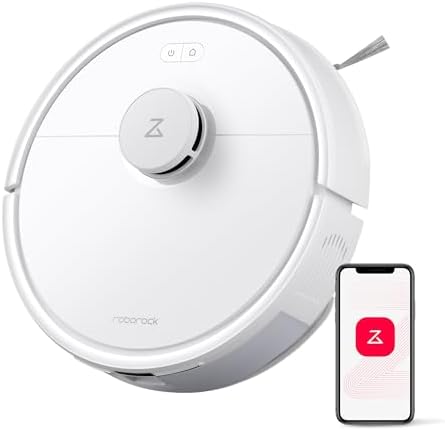
Most homes have both carpet and hard floors, and that mix is where cheap robots fall apart. A machine that is excellent on hardwood can be nearly useless on a thick rug, and one built for deep carpet will scratch a finished floor if its brush is wrong.
The short answer: carpet needs a motorized rubber brush roll and real suction; hardwood needs a soft or retractable brush and a mop that lifts. If you have both, buy a model that raises its mop automatically and set no-mop zones for the rugs. Everything below explains why, and what to check before you buy.
This is an independent buying guide. We may earn a commission from links on this page.
The core conflict
A robot vacuum has one chassis and one brush doing two very different jobs. Carpet wants aggressive agitation and airflow to pull grit out of the pile. Hardwood wants gentleness so the brush does not scuff the finish, plus a mop to deal with the film that vacuuming cannot remove.
That is the entire tension. Every buying decision below is a trade-off between those two jobs, and the models that handle both well are the ones that solve the conflict with hardware rather than with a settings toggle.
1. Brushes: rubber beats bristle on carpet and hair
On carpet, a rubber brush roll agitates fibres and resists hair wrap. Bristle brushes clog with pet hair within a week, then stop making contact with the carpet at all. If you have carpet and pets, rubber is not optional, it is the deciding feature.
The nuance most guides miss: bristle is not automatically bad on hardwood. A soft bristle brush can be gentler on a delicate finish than a stiff rubber vane. The problem is that almost no robot ships with both, so you are choosing which floor gets the ideal brush and which gets a compromise.
What to look for: a removable rubber brush roll (so you can clear wrapped hair), and on premium models a second soft roller that swaps in for hard floors. If the brush is not user-removable, skip the model.
2. Suction matters most on carpet
Hard floors are easy for almost any robot: grit sits on the surface and a modest airflow lifts it. Deep carpet is where suction actually separates models.
| Carpet type | What you need | Why |
|---|---|---|
| Low-pile / Berber | 2,000–4,000 Pa | Fibres are short, surface pickup dominates |
| Medium-pile | 4,000–8,000 Pa | Grit works down into the pile |
| High-pile / frieze | 8,000 Pa and up | Needs airflow to reach the base of the fibre |
| Shag / long pile | Usually not worth it | Robots struggle or stall; a full-size vacuum is better |
Two caveats worth knowing. First, the Pa figure is measured at the inlet in ideal conditions, so a 10,000 Pa robot with a leaking seal performs worse than an 8,000 Pa robot with good sealing. Second, airflow and brush agitation matter as much as peak suction on carpet, which is why a lower-rated model with a strong motorised brush can out-clean a higher-rated one without it.
3. For mopping, check whether the mop lifts
If you mop hard floors and also have rugs, the robot must lift or retract the mop over carpet, or it will drag a wet, dirty pad across your rug. That leaves a damp stripe, transfers kitchen dirt onto the carpet, and can damage the fibres over time.
Combo models that lift the mop handle mixed flooring in one run. Those that do not should be given a no-mop zone in the app for every rug. The difference in daily convenience is large: with lift you press start and forget it, without lift you maintain a mental map of where the rugs are.
4. Use no-mop zones and thresholds
Set no-mop zones in the app for rugs, and add threshold strips for tasselled rugs the robot keeps snagging on. Two minutes in the app prevents most “the robot ate my rug” problems.
Three practical settings worth configuring on day one:
- No-mop zones over every rug, even if the robot lifts its mop. Belt and braces, and it stops the pad from picking up carpet fibres.
- No-go zones for cables, pet bowls, and the tassels on rugs, which are the single most common cause of a mid-run stall.
- Room-by-room scheduling so the kitchen is mopped after dinner and the carpeted bedrooms are vacuum-only.
5. Do you even need a mop?
Not necessarily. If your hard floors are mostly clean and you mainly need hair and dust pickup, a vacuum-only model is cheaper and simpler, and it avoids the whole mop-lift question.
Add mopping only if you want to stop wiping floors by hand. If cost is the deciding factor, our budget picks show what you get below $250 and where the compromises land.
Mixed flooring: the decision table
| Your floor mix | Buy | Avoid |
|---|---|---|
| Mostly carpet, no pets | Vacuum-only, 4,000+ Pa, rubber brush | Paying for mopping hardware |
| Mostly carpet, pets | Vacuum-only, rubber brush, self-empty dock | Bristle brushes |
| Mostly hard floor | Combo with self-washing dock | Cheap standalone robot mops |
| Genuine 50/50 mix | Combo with mop lift + no-mop zones | Models without mop lift |
| Hard floor + a few small rugs | Combo with mop lift | Anything that drags a wet pad |
The 50/50 and small-rug rows are where people most often buy wrong. They pick a model that is excellent on one surface and forget the robot has to cross the other dozens of times per run.
Where robots still struggle
Honesty matters more than enthusiasm here. Three situations where a robot is the wrong tool, regardless of price:
- High-pile or shag carpet. The robot sinks, stalls, or redistributes the pile instead of cleaning it. A full-size vacuum with a powered head is the right answer.
- Very dark hardwood or delicate finishes. Some robots scuff. Test in an inconspicuous corner first, and prefer a soft roller.
- Stairs and landings. No mainstream robot handles stairs. You will still vacuum them by hand.
How to decide, in order
Work down this list and stop where you land.
- Is most of your floor high-pile or shag carpet? Buy a full-size vacuum, not a robot.
- Is more than 70% carpet? Buy vacuum-only with a rubber brush and strong suction.
- Is it mostly hard floor with a few rugs? Buy a combo with mop lift.
- Is it close to 50/50? Buy a combo with mop lift, and plan to set no-mop zones.
- Do you have pets? Whatever the mix, the rubber brush requirement applies first.
Common buying mistakes
- Ignoring floor type and buying on suction alone. The brush tangles or the finish scuffs long before suction becomes the limiting factor.
- Assuming a combo mops everything. Without mop lift, it mops the rug too.
- Skipping no-mop zones. This is a two-minute task that prevents most problems.
- Buying for high-pile carpet. No robot handles it well; the money is better spent elsewhere.
- Forgetting the app. A robot with a poor app is a robot you stop using, whichever floor you have.
Bottom line
Prioritise in this order: rubber brush, then suction matched to your carpet pile, then mop lift if you mop, then dock convenience. For a genuine mixed-floor home the deciding feature is mop lift, because it is what lets one machine handle both surfaces without you intervening.
If you are still narrowing the shortlist, our roundups of pet-hair models, vacuum and mop combos, and budget picks apply this framework to specific models.
FAQ
Can a robot vacuum clean both carpet and hardwood well? Yes, if it has a rubber brush roll, enough suction for your carpet pile, and a mop that lifts over rugs. The mop-lift feature is what makes one machine work on both.
What suction do I need for carpet? Low-pile needs 2,000–4,000 Pa, medium-pile 4,000–8,000 Pa, and high-pile 8,000 Pa or more. Airflow and brush agitation matter as much as the peak number.
Will a robot vacuum scratch hardwood floors? Usually not, but some models mark soft or very dark finishes. Prefer a soft roller and test on an inconspicuous area first.
Do I need a mop if I have hardwood? Not necessarily. Mopping is worth it if you want to stop hand-wiping floors. Otherwise a vacuum-only model is cheaper and simpler.
How do I stop the robot dragging a wet mop onto rugs? Buy a model with mop lift or retraction, and also set no-mop zones in the app for every rug as a backstop.
Is a robot vacuum worth it on high-pile carpet? Generally no. High-pile and shag carpet cause stalling and poor pickup. A full-size vacuum with a powered brush head cleans them better.