Best Budget Robot Vacuums (2026): Great Picks Under $250
The best budget robot vacuums for 2026 — from $140 to $200, compared on suction, hair handling, and whether you really need a mop or self-empty dock.
Pros
- All under $250 — a low-risk way to start
- Every pick is quiet enough for apartments
- Rubber or tangle-resistant brushes on the best picks
Cons
- No self-emptying dock at this price
- Navigation is simpler than flagship models
| Product | Price | Rating | Highlights |
|---|---|---|---|
| $139.99 | 4.3 / 5 |
| |
| $199.99 | 4.0 / 5 |
| |
| $189.99 | 4.1 / 5 |
| |
| $199.99 | 3.6 / 5 |
|
You do not need a $900 robot to keep a small home clean. Under $250 you can get reliable pickup, quiet operation, and — on the best picks — a self-empty dock. Here is where the money is actually worth spending at this price.
Prices from the Amazon product feed, checked October 2026. Confirm current price on the listing.
How we picked
At this price we prioritize reliability, noise, hair handling, and whether a self-empty dock is included. Suction numbers are mostly marketing down here — what matters is whether hair reaches the bin instead of wrapping the roller.
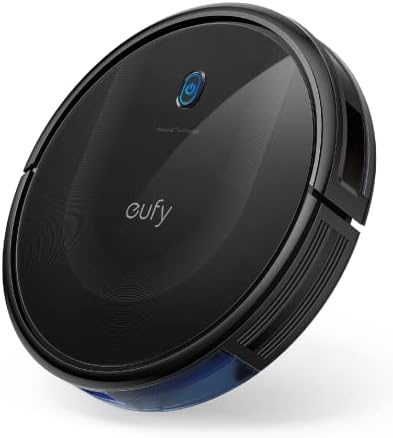
Best under $150: eufy 11S MAX
The eufy 11S MAX is the classic value pick and one of the most-reviewed robot vacuums we track: super-thin, quiet, and dead simple. No dock, but nothing to go wrong either.
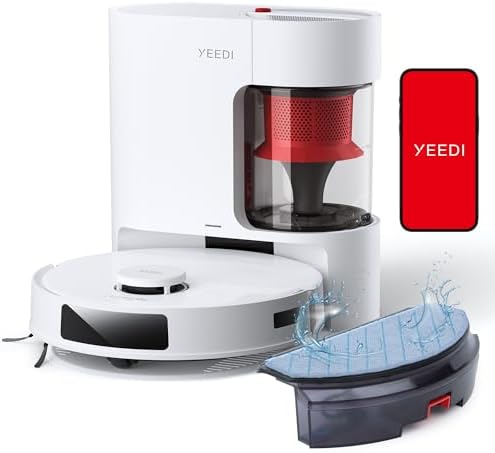
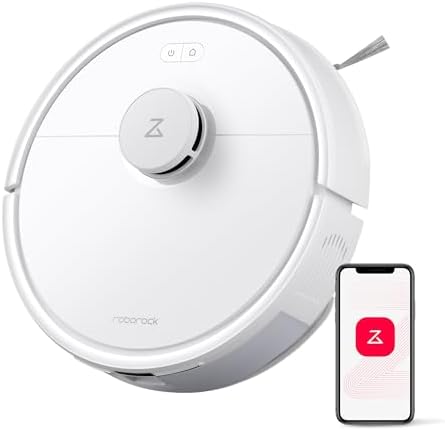
Best with a dock: roborock Q7 L5
If you want a self-empty base without spending much, the roborock Q7 L5 adds 8,000 Pa suction and a mop on top of the dock — the best “real robot” experience near $200.
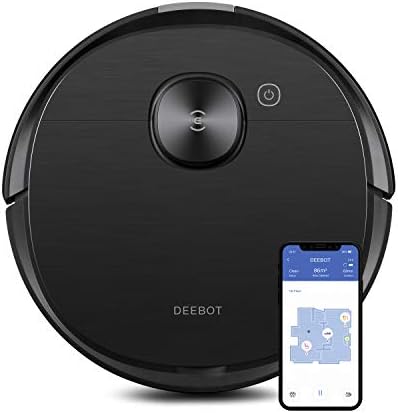
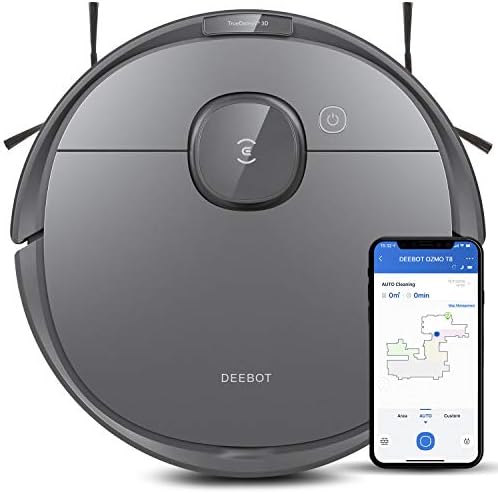
Best navigation: ECOVACS Deebot T8
The ECOVACS Deebot T8 brings precise laser mapping, which means orderly rows instead of random bumping — worth it if you have furniture to navigate.
Bottom line
If you have a small apartment and one pet, a $140–200 robot is plenty. Put your money into a self-empty dock if you can — it is the single biggest quality-of-life upgrade. For maximum hair handling, see our pet-hair picks.
What you give up on a budget robot
Budget robots have improved dramatically, but they still differ from premium models in four ways:
1. Navigation. Cheaper units use gyroscope or random-bounce navigation instead of LiDAR. The result: less efficient paths, more missed spots, occasional stuck episodes.
2. Brush design. Some budget models still ship bristle brushes that tangle. Prioritize a rubber brush even at the low end.
3. Dock features. Expect a basic charging base, not self-empty or self-wash. You will empty the bin yourself.
4. App and mapping. Budget robots may have limited mapping, no no-go zones, or a clunky app.
What you usually do get: decent suction, a usable app, and the ability to keep a small, uncluttered apartment reasonably clean. For the right home, that is enough.
Budget vs. mid-range: is the upgrade worth it?
| Feature | Budget (<$300) | Mid-range ($300–$600) |
|---|---|---|
| Navigation | Gyro / random | LiDAR mapping |
| Brush | Often bristle | Usually rubber |
| No-go zones | Rare | Common |
| Dock | Charge only | Often self-empty |
| Best for | Studio, one room | Whole small home |
The jump from budget to mid-range buys reliable navigation more than anything else. If your home is small and open, budget is fine. If it has several rooms and clutter, the mid-range pays for itself in not getting stuck.
Best uses for a budget robot
- A single room or studio with hard floors.
- A secondary vacuum for a basement, garage, or upstairs.
- A first robot to see whether you actually use one before spending more.
- Pet-free homes where tangle resistance matters less.
Where budget robots struggle:
- Multi-room homes with furniture
- Thick carpet
- Homes with pets that shed heavily
- Anyone who wants set-and-forget automation
What to check before buying
- Brush type — rubber over bristle, even at this price.
- Bin size — small bins mean frequent emptying.
- Cliff sensors — essential with stairs.
- App quality — a bad app ruins a decent robot.
- Replacement parts availability — can you buy brushes and filters?
- Suction — 2,000–5,000 Pa is enough for hard floors.
Realistic expectations
A budget robot will:
- Keep hard floors mostly free of dust and crumbs.
- Need help now and then when it gets stuck.
- Require you to empty the bin after most runs.
- Do better in an uncluttered home.
A budget robot will not:
- Deep-clean carpet.
- Navigate a cluttered multi-room home efficiently.
- Handle heavy pet hair without frequent brush cleaning.
Setting expectations correctly is what separates a happy budget buyer from a disappointed one.
Maintenance
Budget robots need the same care as any other:
- Clear the brush regularly — cheap units tangle faster.
- Empty the bin after each run (no self-empty dock).
- Tap out or rinse the filter.
- Wipe sensors so navigation stays usable.
- Check wheels for wound hair.
See the cleaning routine for details, and the troubleshooting guide when it stops.
FAQ
Are cheap robot vacuums worth it? Yes for small, hard-floored, uncluttered homes, or as a secondary unit. They are less satisfying in large, carpeted, or pet-heavy homes.
What is the minimum I should spend? Roughly $150–$250 gets a usable robot for hard floors. Below that, expect compromises in navigation and build quality.
Do budget robots need Wi-Fi? Most use Wi-Fi and an app. Some can be started with a physical button, which is useful if the app is poor.
How long do budget robots last? Typically 2–4 years with maintenance, versus 4–6 for premium models. Battery is usually the first thing to fail.
Can a budget robot handle pet hair? Lightly. It will need frequent brush cleaning. For heavy shedding, a rubber-brush mid-range model is worth the extra.
Budget robot vs. a stick vacuum
When budget is tight, it is worth asking whether a robot is even the right tool. A stick vacuum at the same price cleans carpet better, never gets stuck, and works on stairs and furniture. What it does not do is run by itself.
| Budget robot | Stick vacuum (~$150) | |
|---|---|---|
| Runs unattended | ✅ Yes | ❌ No |
| Carpet cleaning | ❌ Weak | ✅ Strong |
| Stairs / furniture | ❌ No | ✅ Yes |
| Daily maintenance | Bin + brush | Bin + filter |
| Best for | Daily touch-ups on hard floors | Real cleaning anywhere |
The honest answer: for many homes, a stick vacuum plus a cheap robot is better than one mid-range robot. The stick does the deep cleaning; the robot does the daily touch-ups. If you can only buy one and your floors are carpeted, the stick is the more useful purchase.
Which budget robots to shortlist
Rather than naming a single model — stock and prices change constantly — here is how to shortlist:
- Filter for rubber brush. Skip anything bristle-only if you have pets or long hair.
- Filter for LiDAR if budget allows. Even a basic LiDAR robot outperforms random-bounce navigation.
- Check the app reviews at the app store, not just the product page. A 3-star app ruins a 4-star robot.
- Confirm parts availability — brushes, filters, and batteries should be buyable.
- Read 3-star reviews, which describe the real compromises better than 5-star ones.
A budget robot from an established brand with parts support beats a slightly cheaper no-name unit you cannot maintain.
Product gallery
Images: manufacturer / retailer product shots. Source: product datafeed.