Is a Mopping Robot Vacuum Worth It? (2026 Honest Guide)
A mopping robot is worth it on hard floors and largely wasted on deep carpet. See where it works, where it does not, and which dock features matter.
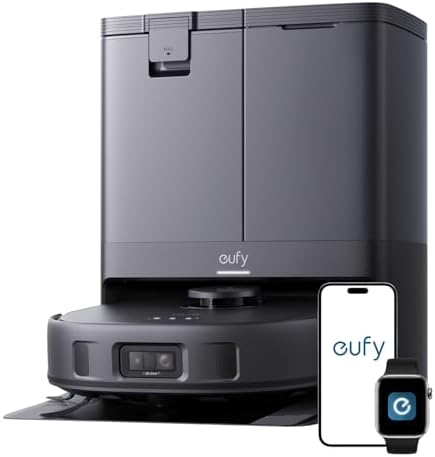
Mopping robots are sold as the obvious upgrade, but for plenty of homes a plain vacuum is the better buy. The honest answer is narrower than the marketing suggests: a mopping robot is worth it when hard floors are your main surface, the mess is light and frequent rather than dried and sticky, and you buy one with a self-washing dock. If any of those three is missing, the money is better spent on suction and a self-empty dock.
This guide covers when mopping pays off, when it does not, which specs actually change the outcome, and what owning one is really like month to month.
Independent guide. We may earn a commission from links on this page.
The short version
If you want the decision in one paragraph: combos with a self-washing dock start around $400 and run to roughly $1,700, and the dock is most of what you are paying for. A robot mop wipes a floor it has already vacuumed. That is genuinely useful on tile, LVP and sealed hardwood for dust, paw prints and kitchen crumbs. It is not useful on dried ketchup, hardened cereal, or a bathroom floor that needs a scrub brush, and it is close to useless if your home is mostly carpet. Judge the purchase on those two facts and you will rarely get it wrong.
When mopping is worth it
The case for a combo is stronger than the case for a standalone robot mop. Four situations make it a clear yes:
- Hard floors are your main surface. Tile, LVP, laminate, and sealed hardwood all take a robot mop well. A home that is 70% hard floor gets constant value; a home that is 70% carpet does not.
- The mess is light and frequent. Dust film, footprints, pet paw prints, kitchen crumbs, a splash of coffee near the sink. This is exactly the dirt a robot wipes away, and it is the dirt that makes a floor feel grubby day to day.
- You want to stop hand-wiping entirely. The real win is not a deeper clean, it is never getting the mop out for a small spill again.
- You are already buying a premium model. Once you are spending $600+ for a self-emptying dock, hot-water mop washing is a small increment on top. Standalone robot mops, by contrast, are a weak buy in 2026 because they duplicate hardware you can get in one machine.
When mopping is NOT worth it
Four situations where the upgrade disappoints:
- Your home is mostly carpet. The robot will spend its time lifting the mop to cross rugs. You paid for a feature that sits idle most of the run.
- You expect it to scrub dried spills. Robot mops press a damp or vibrating pad against the floor. They wipe. Baked-on pasta sauce, hardened syrup, and bathroom soap scum all beat them. A $20 mop and bucket does that job faster.
- You are on a tight budget. A vac-only model at the same price gives you better suction, a bigger dust bag, and more reliable navigation. Hand-mopping once a week costs you nothing extra.
- Your only hard floor is a small bathroom or entry. A combo’s mop hardware is a lot of money for 40 square feet. A $30 spin mop handles it.
What actually separates a good mop robot
Four features decide whether the mopping is pleasant or a chore. Everything else is marketing.
- Mop lift or retract. The pad physically raises, or the whole mop module retracts, when the robot crosses a rug or a no-mop zone. Without it, a wet pad drags across carpet and leaves a damp stripe. This is the single most important feature on the list, because it is what makes a combo usable in a mixed-floor home.
- Self-washing dock. The dock washes and then dries the pad. Without it, you pull a soggy, dirty pad off the robot after every run and wash it by hand, which defeats the entire point.
- Hot-water washing. Warm or hot water breaks down greasy kitchen residue far better than cold. It also sanitises the pad between runs, which matters if the robot also cleans a bathroom.
- Edge mopping. Extendable or offset mop arms reach the last inch along baseboards that a round chassis cannot. It sounds minor, and it is the difference between a floor that looks clean and one with a visible dirt line around the perimeter.
Two secondary features earn their keep: mop pad type (spinning pads scrub better than a single flat vibrating plate) and auto pad removal (the dock drops the used pad and picks a fresh one, so the robot can vacuum and mop in one run without dragging a wet pad across the carpet first).
Robot mop vs a regular mop: what you are actually trading
| Robot mop | Regular mop | |
|---|---|---|
| Frequency | Daily, automatically | When you get to it |
| Pressure | Light, pad weight only | You control it |
| Dried or sticky messes | Poor | Good |
| Under furniture | Reaches it | Usually does not |
| Your time per week | Near zero | 20–40 minutes |
| Cost | $400–$1,700 (combo) | $20–$60 |
The trade is frequency for force. A robot mop keeps a floor at “always acceptable” without you thinking about it. A regular mop gets a floor genuinely clean once it has gotten bad. Most people who are happy with a combo still keep a mop in the closet for the bathroom and the occasional spill.
Where a robot mop does surprise you
Owners consistently report two things they did not expect. The first is how much better a floor looks when it is done daily rather than weekly. A light daily wipe beats a heavy weekly mop, because dust never gets the chance to bond to the surface. The second is how much the kitchen changes. Kitchens get the most foot traffic and the most small spills, and a robot that runs after dinner means you stop noticing the floor at all.
Where it becomes a chore
The friction lives in maintenance, not in the cleaning. Pads need washing, and the dirty-water tank needs emptying every few days. The pad needs replacing every few months. If the dock does a poor job drying, the pad starts to smell. This is why the self-washing dock is not a luxury: it is what keeps the product from turning into another chore you eventually stop doing.
Cost of ownership beyond the sticker price
The purchase price is not the whole number. Budget for these:
- Mop pads: roughly $15–$40 for a multi-pack, replaced every 2–6 months depending on use.
- Dust bags: $15–$30 per pack, one bag lasting around 30–60 days.
- Filters: $15–$25, replaced every 3–6 months.
- Replacement brush rolls: $20–$35, more often in homes with long hair or pets.
That works out to roughly $80–$180 a year in consumables for a heavily used combo. It is not a hidden cost nobody mentions, but it is easy to forget when comparing two models that sit $100 apart.
How to decide, in order
Work down this list and stop at the first line that describes you.
- Is more than half your floor carpet? If yes, skip the mop and buy a vac-only model with strong suction and an anti-tangle brush.
- Do you care about deep-cleaning dried messes? If yes, keep a mop. Buy a combo for maintenance, not for the heavy jobs.
- Will you actually empty and wash things? If the answer is no, do not buy a combo without a self-washing dock. You will stop using it.
- Is your budget under $400? Buy vac-only. A cheap combo does every job poorly.
- Otherwise: buy a combo with mop lift, a self-washing dock, and hot-water wash, then pick the model that fits your floor plan.
Common buying mistakes
- Buying a standalone robot mop. They cost almost as much as a combo and do less. In 2026 there is little reason to own one.
- Ignoring mop lift. In a mixed-floor home this is the feature that decides whether the robot is usable or annoying.
- Assuming all docks self-wash. Plenty of mid-range models have a self-emptying dock and a hand-wash mop. Read the spec carefully, because the two are frequently conflated.
- Chasing suction numbers over the dock. On hard floors, airflow and pad quality matter more than the marketing Pa figure.
- Forgetting the consumables. A $50 cheaper model can cost more over two years if its pads are proprietary and expensive.
What owning one is actually like
A typical day: the robot runs its schedule while you are out or asleep. It vacuums first, then mops, lifting the pad when it crosses the rug in the hallway. The dock washes the pad in hot water and dries it. You empty the dirty-water tank every few days and the dust bag once a month. That is the whole routine.
What changes is not how clean your floor gets on any single day. It is that your floor is never bad. That is the honest value proposition, and it is why people with hard floors rarely go back.
Bottom line
Mopping is worth it when hard floors, light daily messes, and a self-washing dock describe your home. Otherwise a vac-only model is the smarter buy and the leftover money is better spent on suction and a good self-empty dock. If you do buy a combo, spend the extra on mop lift before anything else, because that is the feature that makes it work in a real, mixed-floor home.
Still deciding between a combo and a vacuum-only model? Our guides to robot vacuum and mop combos, pet-hair picks, and how to clean a robot vacuum cover the practical side of ownership.
FAQ
Do robot mops actually clean floors? They clean light, loose dirt well: dust, crumbs, paw prints and small spills. They do not scrub dried or sticky messes the way a mop and bucket do.
Are robot mop combos worth the extra cost? Only if hard floors are your main surface and the model has a self-washing dock. On mostly-carpet floors the mopping hardware is wasted money.
Can I use a mopping robot on carpet? Not to mop. It should lift its pad or avoid carpet via no-mop zones. Mopping carpet leaves it damp and can damage the fibres.
How often do robot mop pads need replacing? Every two to six months depending on how often the robot runs. A pack typically costs $15–$40.
Do I still need a regular mop? Most owners keep one for bathrooms, stairs, and dried spills. A robot mop maintains a floor; it does not replace a deep clean.
What is mop lift and why does it matter? It raises the pad when the robot crosses a rug or a no-mop zone, so a wet pad never drags across carpet. In a mixed-floor home it is the feature that makes the combo usable.