Best Dash Cams (2026): Front, Rear & 3-Channel Compared
The best dash cams in 2026 ranked by channel count, sensor and price. See which setups read plates at night and which are worth the extra cost.
Pros
- 2K dual-channel with Starvis 2 sensors front and rear
- Reads plates at night, which is the thing that matters
- Capacitor design copes with summer heat in a parked car
Cons
- Parking mode needs a hardwire kit, sold separately
- App is functional rather than pleasant
- Rear cable routing takes patience in some cars
| Product | Price | Rating | Highlights |
|---|---|---|---|
| $189.99 | 4.3 / 5 |
| |
| $399.99 | 4.4 / 5 |
| |
| $169.99 | 4.2 / 5 |
| |
| $412.99 | 3.8 / 5 |
| |
| $95.99 | 4.3 / 5 |
| |
| $129.98 | 4.3 / 5 |
|
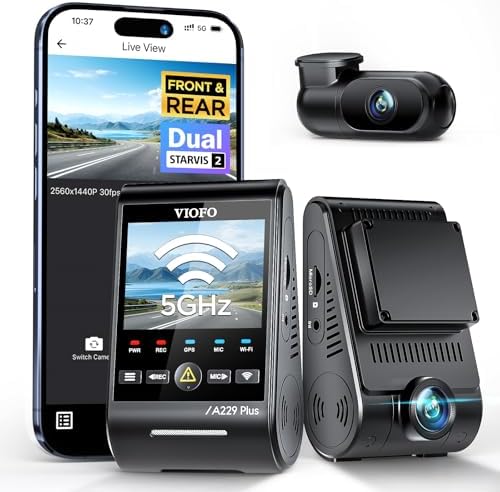
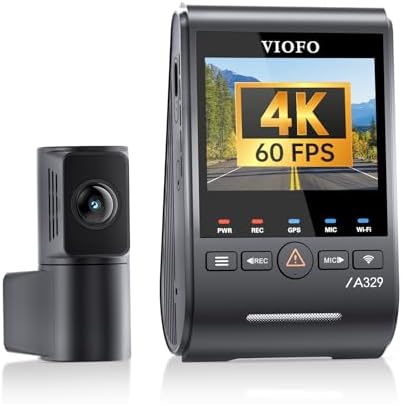
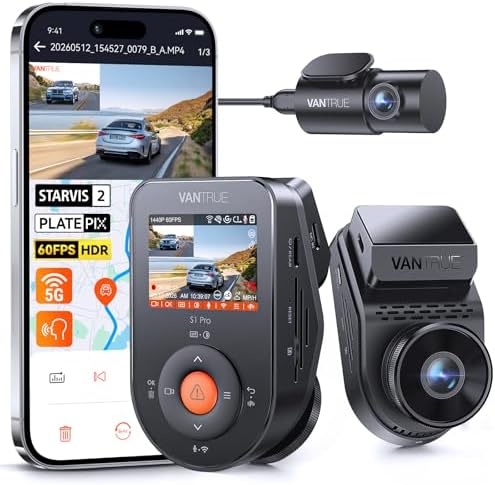
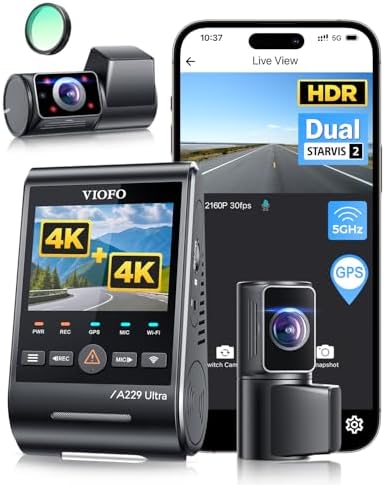
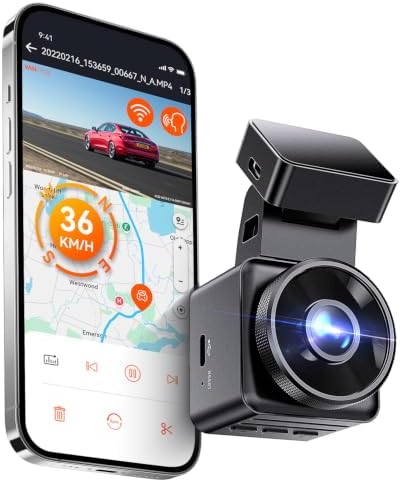
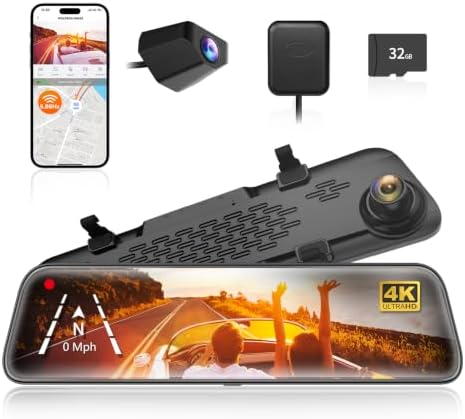
The best dash cam for most drivers in 2026 is a two-channel Starvis 2 setup at $170–$320. It records both directions, reads plates at night, and stops short of the flagship prices that buy features a private car will never use.
The ranking below is organised by what you actually need rather than by price, because the category has an unusual property: the cheap option is often the correct one.
Independent guide. We may earn a commission from links on this page.
How this list is organised
Four buyers, four answers:
| You are | Buy | Budget |
|---|---|---|
| A typical private driver | 1-channel Starvis 2 | $90–$200 |
| You want front and rear | 2-channel Starvis 2 | $170–$320 |
| You carry passengers for work | 3-channel | $310–$420 |
| You want a mirror-replacement screen | Mirror-style unit | $130–$400 |
Best value two-channel
The category where most drivers should land. You gain a rear channel and a current-generation sensor for roughly $100 over a single-channel camera, and the rear channel is the one that catches rear-end collisions and tailgating.
What to look for: dual Starvis 2 sensors (not just the front), 2K front at minimum, capacitor rather than battery, and a hardwire kit available for parking mode.
The key buying check is that both sensors are Starvis 2. Some cameras pair a good front sensor with a budget rear one, which defeats the point of the rear channel at night.
Best three-channel
Three channels add an interior camera, which matters only if you carry passengers professionally: rideshare, delivery, or a work vehicle. For a private car it records the back of your own head.
What to look for: dual 4K front and rear plus a 1080p interior channel, IP-rated rear camera if it mounts outside, and enough card capacity to hold three streams. Budget 256GB.
This tier costs $310–$420, and the honest advice is that most private buyers should not go here.
Best single-channel (the sensible minimum)
A single Starvis 2 front camera at $90–$170 covers the majority of incidents that actually get disputed. If you are unsure whether you want a dash cam at all, this is the cheapest way to find out, and it is not a compromise on the thing that matters: night footage.
The trade-off is only the rear direction. If you have never been rear-ended and drive mostly in light traffic, that is not a real loss.
Best mirror-style
Mirror-replacement units take over the rear-view mirror and show a wide rear view on screen, plus a recording function. They suit drivers who want a big rear view, vans and pickups with limited rear visibility, and anyone who prefers a screen to an app.
What to look for: whether the mirror is genuinely dimmable, whether the screen can be switched off for night driving, and how the rear camera handles rain and glare. This format is more polarising than the standard type: some drivers love the wide view, others find the screen distracting at night.
The accessories that decide whether it works
Two cheap extras matter more than any camera upgrade:
1. Hardwire kit with voltage cut-off ($20–$35). Without it, parking mode does not function, because the 12V socket is dead when the ignition is off. The voltage cut-off is the critical detail: it powers the camera down before the battery is drained, typically adjustable around 11.8–12.4V. A kit without one is a flat battery waiting to happen.
2. High-endurance memory card ($20–$60). A standard card will fail under continuous writing, and the symptom is a camera that quietly stops recording. This is the single most common dash cam “fault”, and a high-endurance card prevents it. 128GB is enough for driving; step up to 256GB for parking mode.
A CPL polarising filter at $20–$30 is a worthwhile third: it removes windscreen and dashboard reflections, which is the biggest cause of poor daytime footage.
What does not matter as much as you think
- A 4K badge on an older sensor. Night performance comes from the sensor generation, not the pixel count.
- Built-in screens. You pull the card, not watch playback in the car.
- Cloud upload. Needs a hotspot and adds complexity for a private car.
- Very wide lenses. Around 140° is a better balance than 170°, which distorts and makes distant plates harder to read.
- Wi-Fi app quality. Almost universally mediocre. Do not choose on it.
Installation and legality
Fitting a dash cam is a straightforward DIY job: route the cable along the top of the windscreen, down the A-pillar, and into the socket or a fuse tap. Twenty to thirty minutes with a trim tool.
Use a fuse tap, not a splice, for a hardwire kit. If you would rather not work near the fuse box, an auto electrician fits a camera and kit in about an hour.
Two things to verify locally:
- Mounting rules. A camera in the driver’s eyeline may be illegal where you drive.
- Footage rules. What you may record and publish varies by jurisdiction.
Bottom line
Buy by channel count and sensor, not by resolution. Most drivers should land on a two-channel Starvis 2 camera at $170–$320, plus a hardwire kit with a voltage cut-off and a high-endurance card.
If you only want front coverage, a single-channel Starvis 2 camera at $90–$170 is not a compromise, it is the correct purchase. For the full selection framework, see our dash cam buying guide.